

V462 Lupi: A Nova Visible to the Naked Eye
Looking back (as of September 2026): V462 Lupi has long since faded far below naked-eye brightness. This post describes the nova as I followed it in the summer of 2025.
In June 2025 a spectacular celestial event captivated astronomers and stargazers alike: the nova V462 Lupi. Discovered on June 12, 2025, in the southern constellation of Lupus, this nova rapidly brightened to become visible to the naked eye. A rare phenomenon that offered a striking window into the dynamic processes of our galaxy.
What Is V462 Lupi?
V462 Lupi, also known simply as Nova Lupi 2025, is classified as a classical nova. This type of nova occurs in a binary star system where a white dwarf star accretes hydrogen-rich material from a close companion star. Over time, the accumulated material on the white dwarf’s surface ignites in a runaway thermonuclear fusion reaction, causing a dramatic brightening of the system. Sometimes brightening by factors of over 100,000 times its normal brightness.
Before the explosion, the system was a faint star of about magnitude 22.3 (in the blue band). After the nova event, V462 Lupi’s brightness jumped to about magnitude 8.7 at discovery, and it peaked near magnitude 5.5 by June 20, making it briefly visible without telescopes under dark skies.
Observational Highlights
- Initial discovery magnitude: 8.7 (too faint for naked eye)
- Rapid brightening: Reached magnitude 5.7 by June 18 and peaked at 5.5 on June 20
- Visibility: Easily seen with binoculars and small telescopes; naked-eye visibility for observers in dark-sky locations south of about 50° north latitude
- Orbital period: The binary system’s stars orbit each other every 1.797 hours, indicating a very close binary
This brightness surge corresponds to the star becoming several million times brighter than its prior state, a striking testament to the power of these explosive stellar phenomena.
Scientific Importance of V462 Lupi
Novae like V462 Lupi are critical for astrophysics. They provide natural laboratories to study accretion physics, nuclear fusion under exotic conditions, and the evolution of close binary systems. Because this nova was discovered early, while it was still rising, and became bright enough for small telescopes, professionals and amateurs could follow it in detail. Its short orbital period of 1.797 hours places it at the lower edge of the so-called period gap of cataclysmic variables.
Where and When to See It
V462 Lupi is located in the constellation Lupus in the southern celestial hemisphere. The nova was observable throughout June and into July 2025 with modest amateur equipment, primarily visible from the Southern Hemisphere and mid-northern latitudes up to roughly 50° north. Observers with dark skies could glimpse it without aid around the nova’s peak brightness.
Why Novae Matter
Novae are crucial stars for understanding the life cycles of binary star systems. Unlike supernovae, classical novae are violent yet repetitive outbursts, with the white dwarf surviving to accrete material from its companion and erupt again. They also contribute to the chemical enrichment of the galaxy by ejecting newly formed elements into space.
In addition to scientific study, bright novae like V462 Lupi captivate the public’s imagination by suddenly “lighting up” the night sky. They remind us that the cosmos is active and ever-changing, with new stars briefly appearing where none seemed to exist.
In summary, V462 Lupi was a textbook example of a classical nova, one that dramatically brightened within our galaxy and was visible to the naked eye for a short time. Its discovery and observation have not only thrilled amateur and professional astronomers but also deepened our understanding of these explosive stellar phenomena that punctuate the night sky with sudden brilliance.
It did not stay alone for long: on June 25, 2025, V572 Velorum erupted in the southern constellation Vela and peaked at magnitude 4.8 on June 27. For a few days, two novae were visible to the naked eye in the southern sky at the same time.
My Own Observations of V462 Lupi
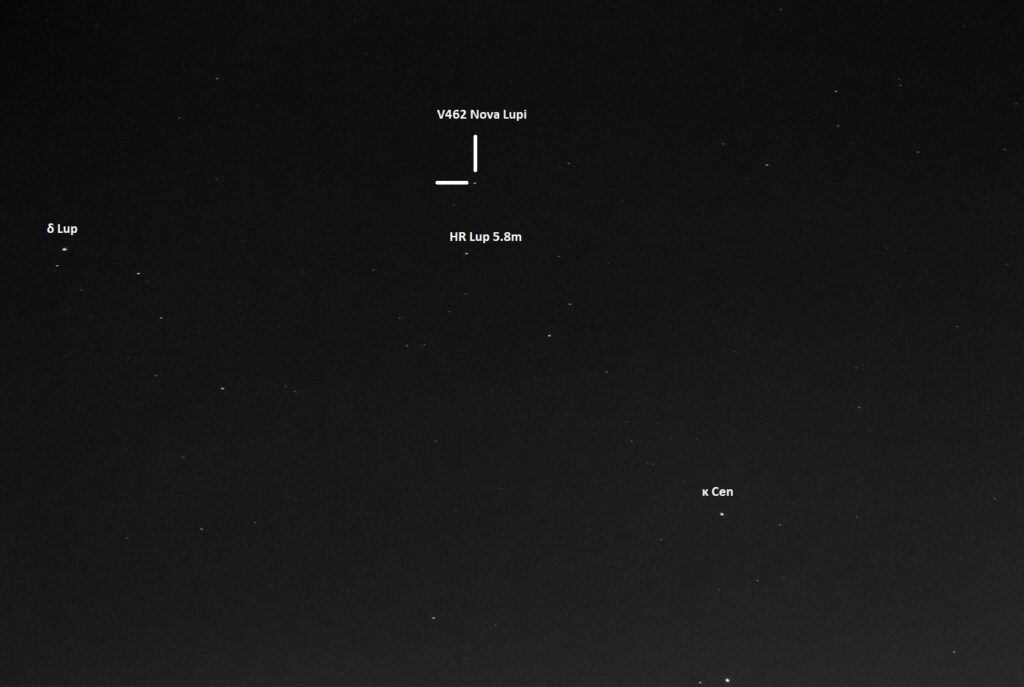
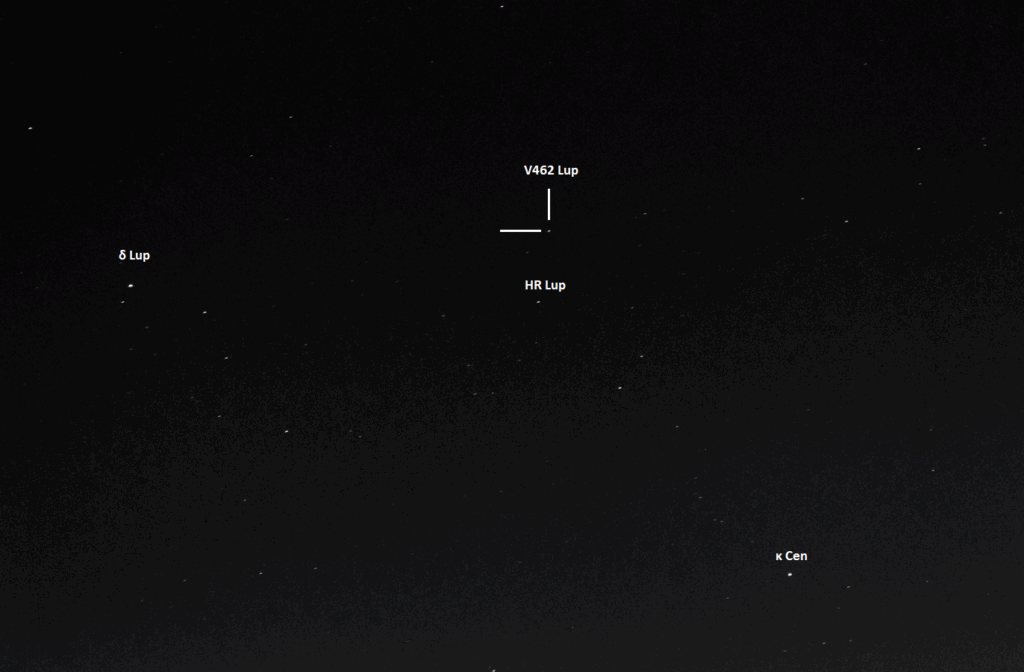
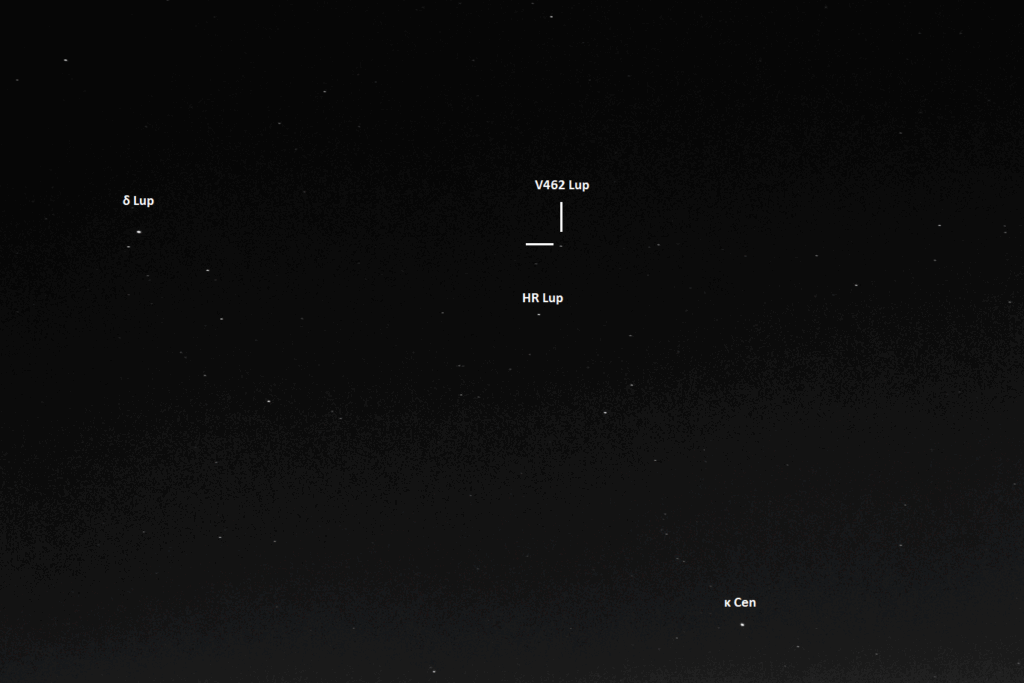
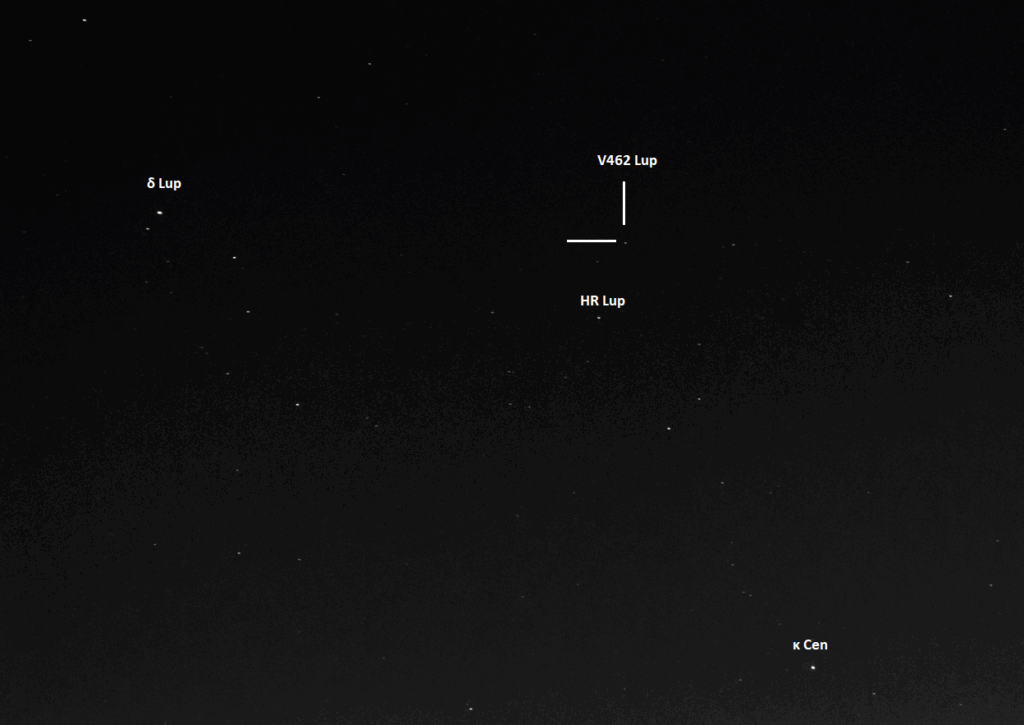
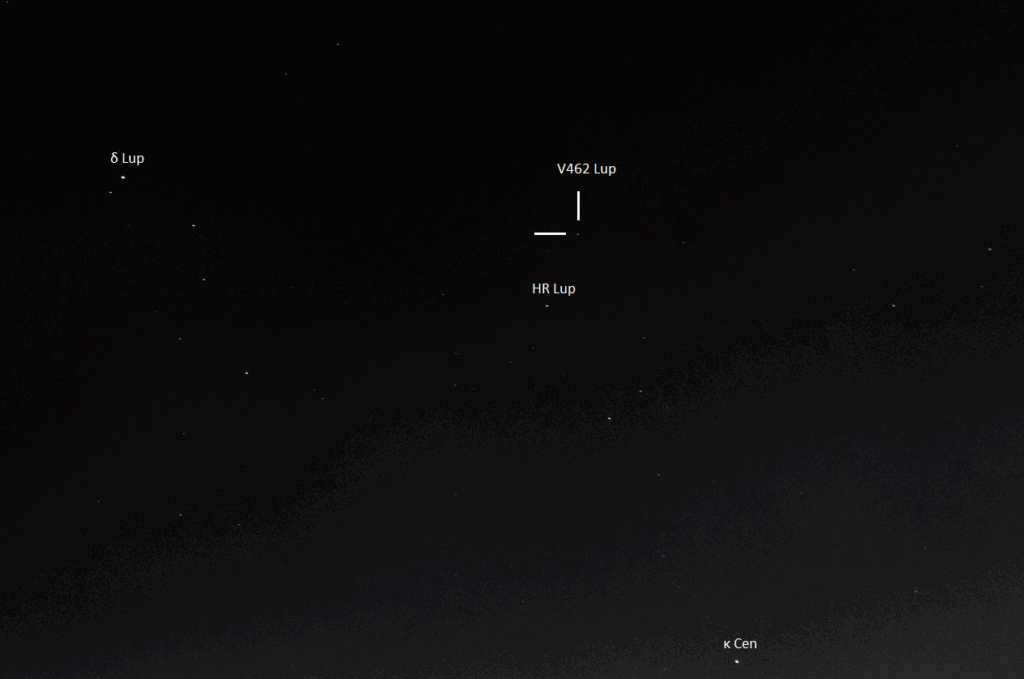
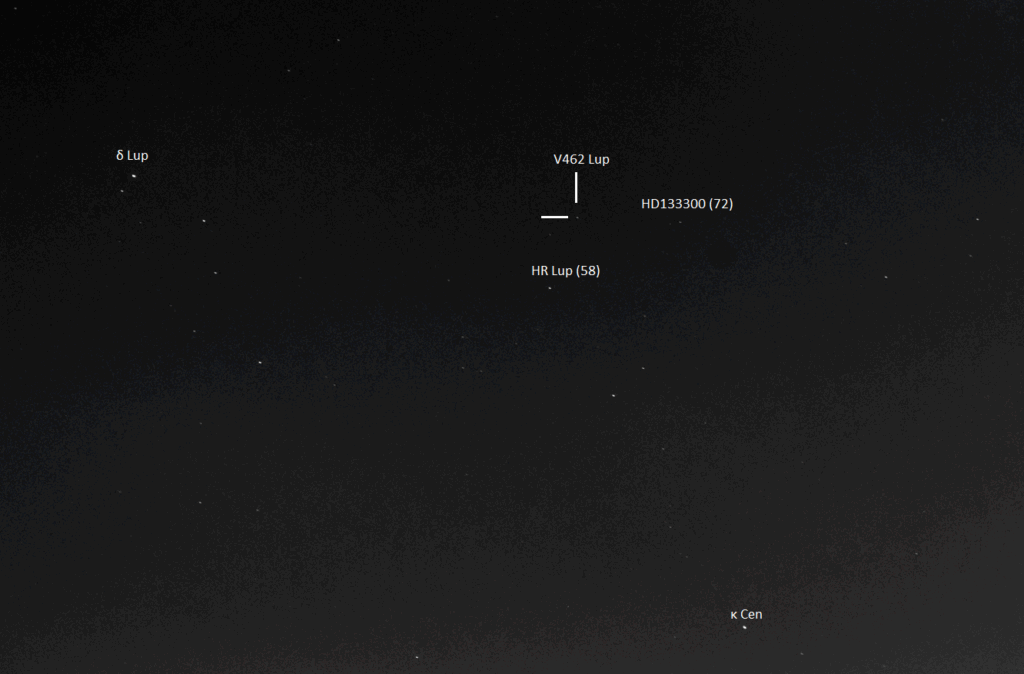
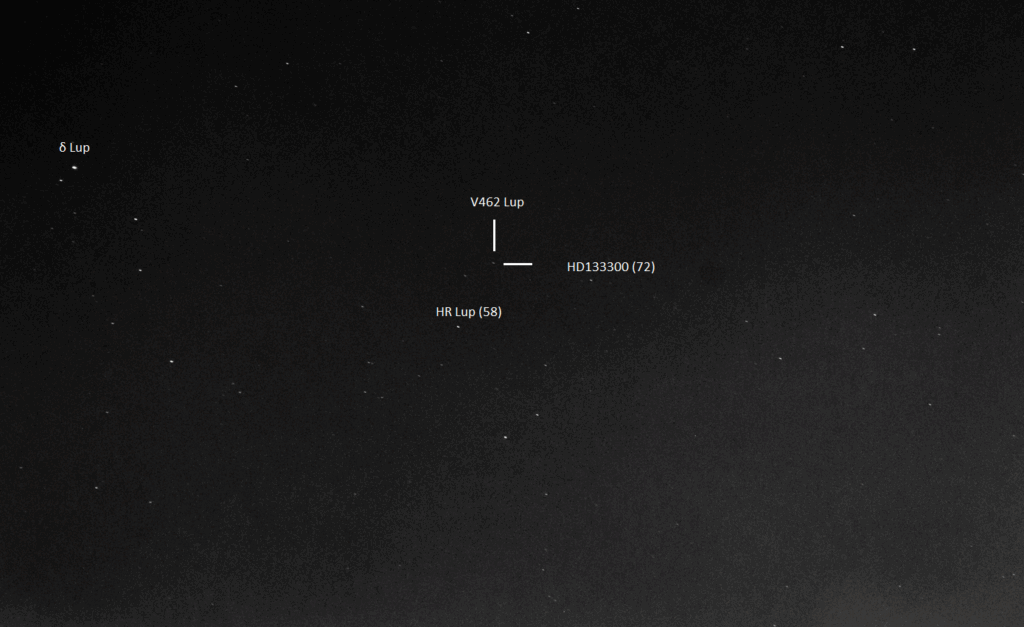
I first became aware of the nova V462 Lupi shortly after it reached its peak brightness of about magnitude 5.5 on June 20th, 2025. For nearly two weeks, the nova maintained a steady brightness between magnitudes 5.8 and 6.0 before beginning a gradual decline in luminosity. This extended period of visibility offered a unique opportunity to observe and photograph this remarkable celestial event. Below are some of my images of the nova.
Two more novae I have followed since then are Nova V0488 Sge and Nova V2104 Aql.