
In autumn 2024, C/2023 A3 (Tsuchinshan-ATLAS) was the brightest comet visible from the northern hemisphere since Hale-Bopp. I photographed it from Alexandria in two phases: in late September, shortly after perihelion, in the morning twilight, and from mid-October in the evening sky. All images were taken with a DSLR and telephoto lens on a fixed tripod without tracking, some of them as stacks of several frames.
Fact Sheet: C/2023 A3 (Tsuchinshan-ATLAS)
- Discovery: On 9 January 2023 at the Purple Mountain Observatory in China (“Tsuchinshan” in an older romanization), as a faint object about 8 AU away. On 22 February 2023 the ATLAS survey in South Africa identified it as a comet, hence the double name.
- Perihelion: On 27 September 2024 at 0.39 AU (about 58 million km) from the Sun.
- Closest approach to Earth: On 12 October 2024 at 0.47 AU (about 71 million km).
- Peak brightness: About −4.9 mag on 9 October 2024. At that time the comet stood almost between Earth and Sun and scattered sunlight strongly forward (forward scattering). From 7 to 11 October it was visible in the coronagraph of the SOHO spacecraft.
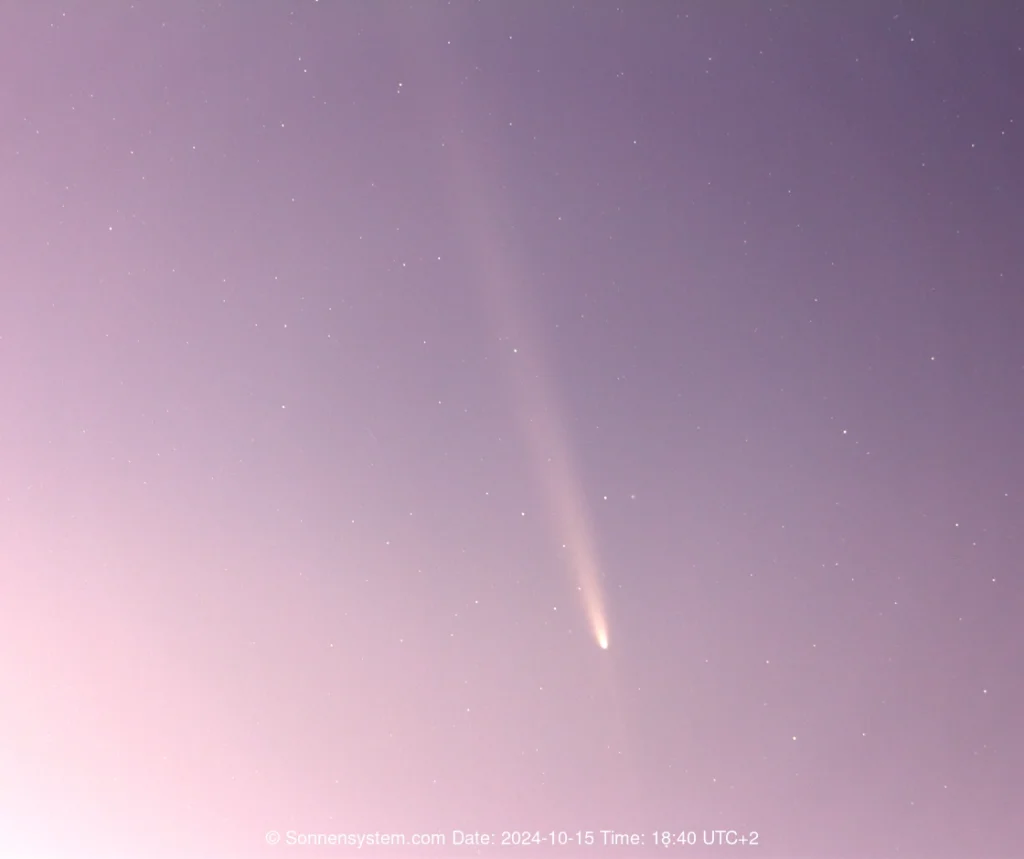
- Tail and anti-tail: In photos the tail was more than 20° long in mid-October. Around 14 October, when Earth crossed the comet’s orbital plane, a narrow anti-tail appeared that seemed to point towards the Sun.
- Orbit: The comet came from the Oort Cloud. Planetary perturbations have made its outbound orbit slightly hyperbolic, so it may leave the solar system for good.
Mornings Shortly After Perihelion
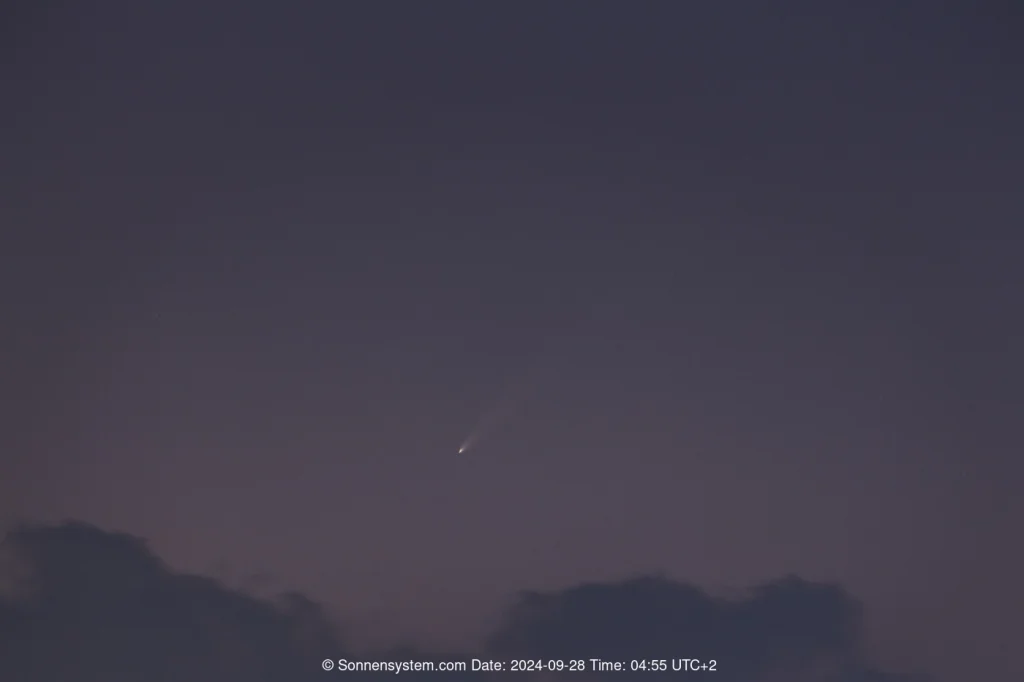
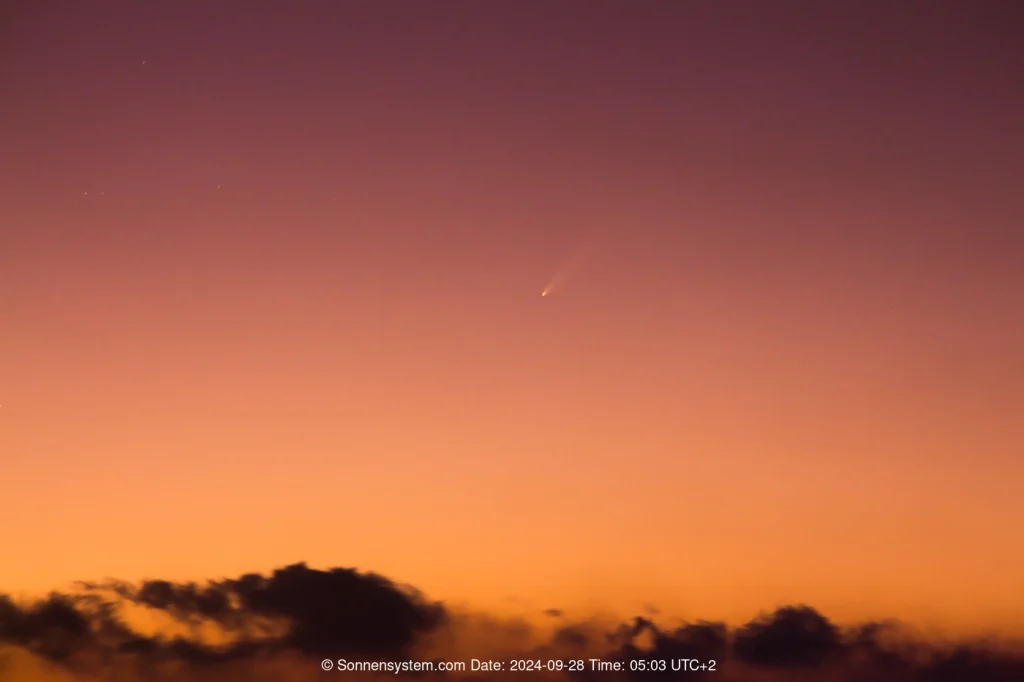
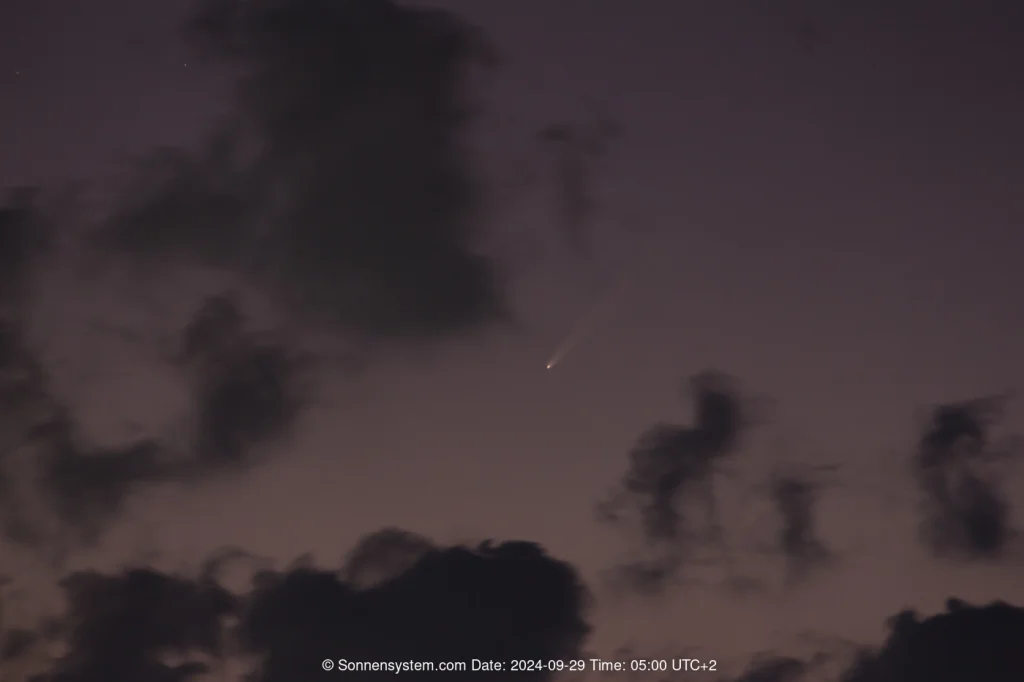
In late September the comet stood low in the east in the morning twilight. Between the comet rising and the sky getting bright there was only a short window each morning, and there were clouds on the horizon as well. On 28 and 29 September it worked anyway.
Evenings in Mid-October
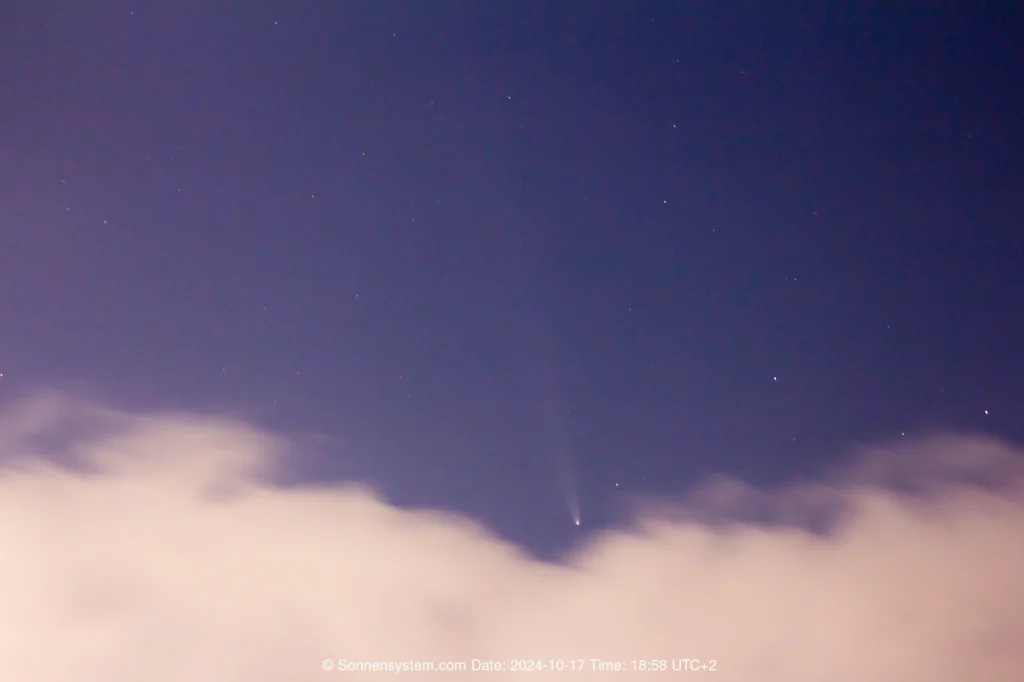
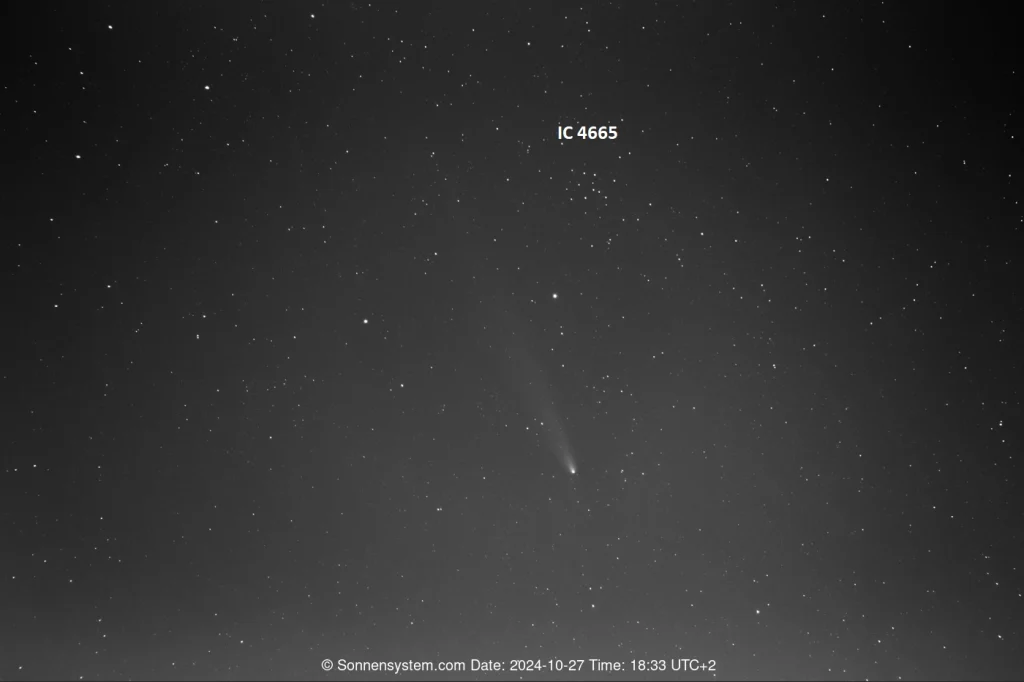
After its closest approach to Earth the comet moved into the evening sky and stood higher above the western horizon every day. On 15 October its tail stretched across the whole frame of my images. The pink colour of the sky comes from the evening twilight and the city’s light dome. Two days later the comet hung just above a bank of clouds, and by late October it had faded noticeably and was moving through the constellation Ophiuchus.
What Happened Next
In late October the comet faded quickly, and from early November it was no longer visible to the naked eye. I was able to observe another bright comet in January 2025, although under much harder conditions: C/2024 G3 (ATLAS). More about the structure and origin of comets is on my page about comets.