

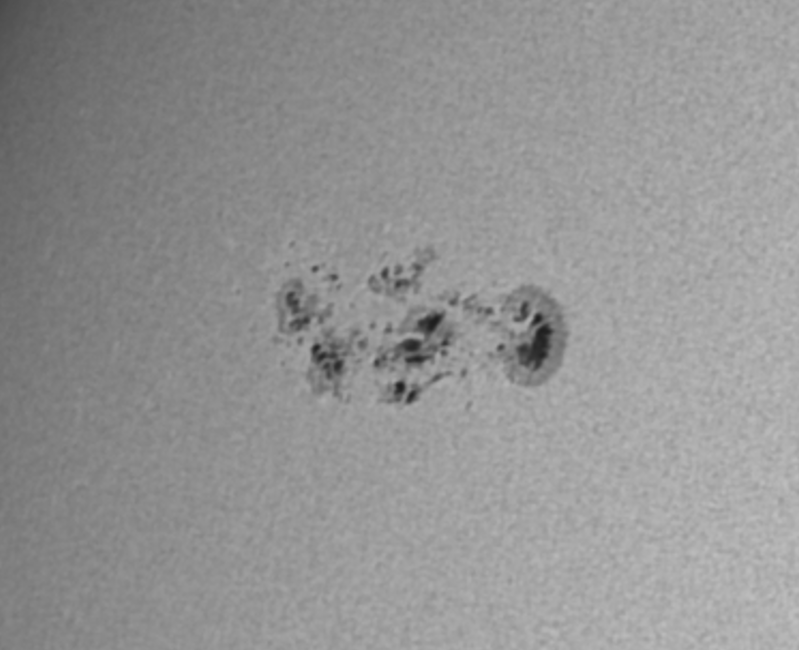
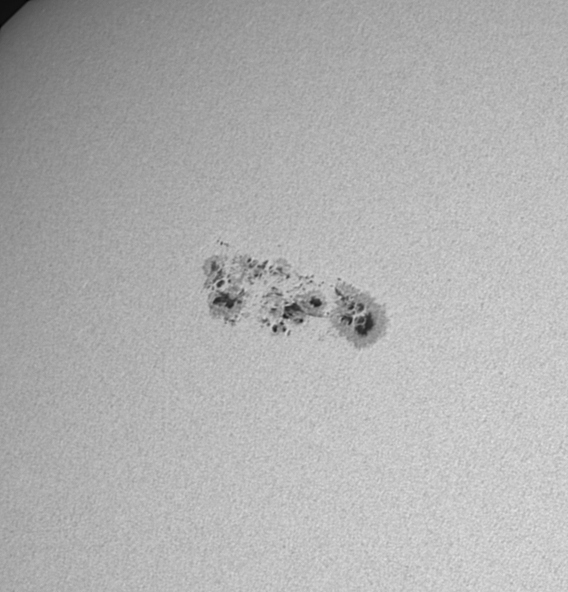
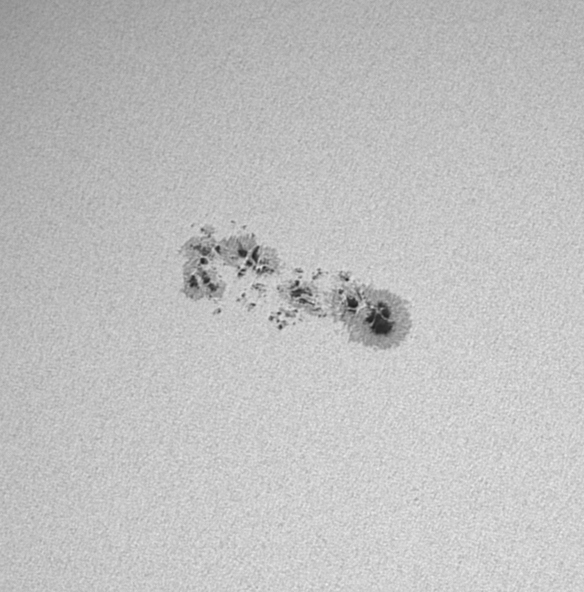
Our closest star the sun is proving that it is far from quiet after the maximum of Solar Cycle 24 in late 2024. For those who monitor space weather, the last 48 hours have been nothing short of spectacular. A new sunspot group has appeared on the solar disk: Sunspot Region AR4366. This complex magnetic structure has rapidly evolved from a non-existent speck into a massive active region nearly ten times the width of Earth, unleashing a series of high-intensity solar flares.
Understanding these phenomena is no longer just for astrophysicists. As our society becomes more dependent on satellite technology and global power grids, “Space Weather” has become a vital part of our daily forecast.
What is a Solar Flare?
A solar flare is a colossal explosion on the Sun’s surface. These events occur when the intense magnetic field lines in the solar atmosphere – specifically around sunspots – become twisted and suddenly snap or reconnect. This process, known as magnetic reconnection, releases a burst of energy equivalent to millions of hydrogen bombs exploding at once.
Flares emit a broad spectrum of radiation, from radio waves to X-rays and gamma rays. Because this radiation travels at the speed of light, it reaches Earth in just over eight minutes.
The Flare Classification Scale
To communicate the severity of these bursts, NOAA (the National Oceanic and Atmospheric Administration) uses a letter-based classification system:
- C-Class: Small events with few noticeable consequences on Earth.
- M-Class: Medium-sized flares that can cause brief radio blackouts in the polar regions and minor radiation storms.
- X-Class: The “heavy hitters.” These are major events that can trigger planet-wide radio blackouts and long-lasting radiation storms.
Spotlighting AR4366: A “Delta-Class” Threat
In early February 2026, all eyes turned to Region 4366. According to data from SpaceWeatherLive and the NOAA Space Weather Prediction Center (SWPC), this group didn’t even exist when the month began. Its growth has been exceptionally rapid – a trait often associated with extreme instability.
AR4366 currently possesses a ‘delta-class’ magnetic field. In simple terms, this means that the positive and negative magnetic poles within the sunspot group are so tightly packed together that they are prone to explosive reconnection.
Recent Activity Logs (February 1–2, 2026)
The region has already lived up to its dangerous reputation. On February 1st, AR4366 produced a powerful triple-peaked flare sequence (M7-X1-M6) that lasted over six hours. This was followed by even more significant eruptions:
- X8.1 Flare: Peaking late on February 1st (23:44 UTC), this was a “strong” R3-level event. It caused an immediate shortwave radio blackout across the Pacific, impacting aviation and maritime communications.
- X2.9 Flare: Barely an hour later, the region fired again, hammering the same sector of Earth’s atmosphere with high-energy photons.
Understanding Space Weather and Its Effects
While “weather” on Earth involves rain and wind, space weather involves the movement of energy and matter through the solar system. There are three primary ways a solar storm from a region like AR4366 can affect Earth:
1. Radio Blackouts (R-Scale)
When X-rays from a flare hit the upper layers of Earth’s atmosphere (the ionosphere), they ionize the gas, making it much denser. This “thickens” the layer that normally reflects high-frequency radio waves, causing them to be absorbed instead. This leads to the radio blackouts recently experienced over South America, Africa, and the Pacific.
2. Solar Radiation Storms (S-Scale)
Sometimes, a flare accelerates protons to near-light speeds. These “energetic particles” can penetrate satellite shielding, causing electronic glitches or “bit-flips” in onboard computers. They also pose a health risk to astronauts and passengers on high-altitude flights over the poles.
3. Geomagnetic Storms (G-Scale)
The most famous effect of space weather is the Aurora. If a flare is accompanied by a Coronal Mass Ejection (CME)—a massive cloud of solar plasma—it takes 1 to 3 days to reach Earth. When it arrives, it rattles Earth’s magnetic field. While this creates beautiful Northern and Southern Lights, a strong G5-level storm can induce currents in power lines, potentially damaging transformers and causing electrical blackouts.
Solar Cycle 25: Post Peak
The activity of AR4366 is a hallmark of Solar Cycle 25. Every 11 years, the Sun’s magnetic field completely flips, transitioning from a quiet “solar minimum” to a active “solar maximum.”
Recent predictions from the NOAA SWPC panel suggest that we are currently within the post maximum period, which is expected to remain elevated through early 2026. This means we should expect more regions like AR4366 to emerge, bringing with them more frequent X-class flares and high-latitude aurora displays.
Monitoring AR4366
As AR4366 continues to rotate across the solar disk, it remains in a “strike zone” where any further eruptions could have a direct path toward Earth. For enthusiasts and professionals alike, resources like SpaceWeatherLive.com and the NOAA Enthusiast Dashboard are essential tools for tracking these developments in real-time.
While the Sun’s power is a reminder of our vulnerability in a high-tech world, it is also a source of incredible natural beauty. Whether you are a radio operator adjusting for a blackout or an aurora chaser waiting for the next CME, one thing is certain: the show is far from over.